About Us
 Our Commitment to the PHS Strategy
Volunteer Services is committed to growth and believes in the positive power of innovation and continuous improvement. We can grow by learning and understanding the needs of the organization as a whole and incorporating active and reflective feedback to guide our conversations, decisions, ideas and adjustments. By thinking creatively and embracing a growth mindset, we will find new ways to engage volunteers and sustain our blossoming program for years to come.
Our Commitment to the PHS Strategy
Volunteer Services is committed to growth and believes in the positive power of innovation and continuous improvement. We can grow by learning and understanding the needs of the organization as a whole and incorporating active and reflective feedback to guide our conversations, decisions, ideas and adjustments. By thinking creatively and embracing a growth mindset, we will find new ways to engage volunteers and sustain our blossoming program for years to come.
 Our vision:
Earning the letter through the Presbyterian Promise Dear PHS volunteer services,
Thank you for creating a comfortable environment by placing compassionate volunteers throughout the hospital. They took the time to greet me, listen to my story, and treated me like a human. I could tell that everyone I interacted with had only the best intentions, and the kindness I felt had a profound impact on me. Your volunteers are shepherds of goodwill, they truly eased the way as I navigated a really difficult time.
 Our Commitment to PHS Culture
We consistently strive to create a culture of
collaboration, mutual support, empathy,
and inclusivity where we encourage
respect and offer a welcoming space for
our extended team. Our goal is to foster a
strong partnership between the volunteers
and various departments across the
Presbyterian hospital system by
celebrating the individual strengths and
unique talents that each volunteer brings
to their role. We will utilize the tools of
compassionate listening and thoughtful
communication in order to recognize and
share strengths while making an impactful,
tangible difference in our community.
Our Commitment to PHS Culture
We consistently strive to create a culture of
collaboration, mutual support, empathy,
and inclusivity where we encourage
respect and offer a welcoming space for
our extended team. Our goal is to foster a
strong partnership between the volunteers
and various departments across the
Presbyterian hospital system by
celebrating the individual strengths and
unique talents that each volunteer brings
to their role. We will utilize the tools of
compassionate listening and thoughtful
communication in order to recognize and
share strengths while making an impactful,
tangible difference in our community.

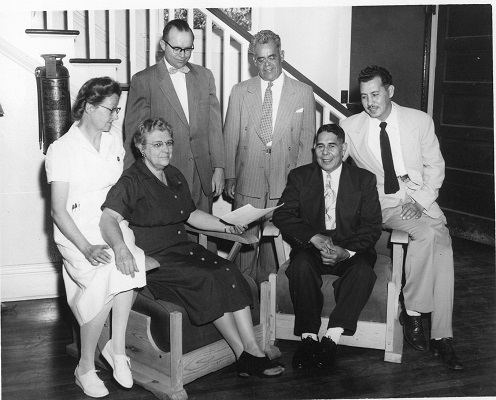
It was in 1952 that a small group of community minded women, led by Marion Van Devanter (Mrs. Van), met at the request of the hospital administrator to see what they could do to help patients. They decided to start an auxiliary with three goals: To serve hospital patients directly, to raise money for equipment the hospital needed and to inform the public about health care and the functions of the hospital.
Mrs. Van had a heart full of purpose and a phrase that guided everything she did: "If we can, we should." That phrase still guides us today.
What makes our volunteer program different? We do not just fill roles-we build relationships. Our program is rooted in purpose, connection, and history. Volunteers are not just helpers; they are vital members of our team, bringing compassion, energy, and heart to every interaction. One of our greatest strengths is the structure behind the service. Our systemized program ensures that no matter which location you serve in, you will receive the same high-quality training, support, and recognition. Our system approach creates a shared sense of purpose and belonging, making it easy to feel part of something bigger-whether you are new or seasoned, downtown or rural. We offer meaningful opportunities, empower volunteers through structured onboarding and ongoing education, and foster a culture that celebrates service and connection. Here, your time makes a difference-and so do you.
 Statistics
· Presbyterian ended 2024 with 525 active volunteers.
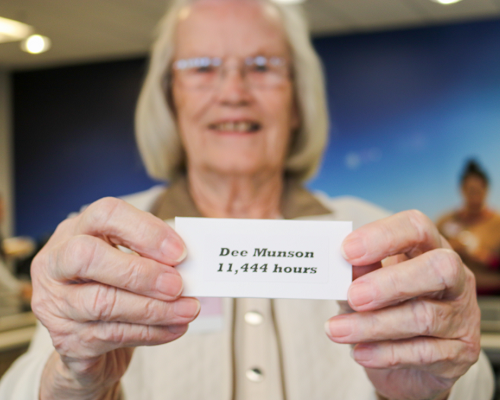
· Volunteers contributed 68,000 hours, an equivalent to 33 FTEs, and savings to the organization of almost $2.3 million.